
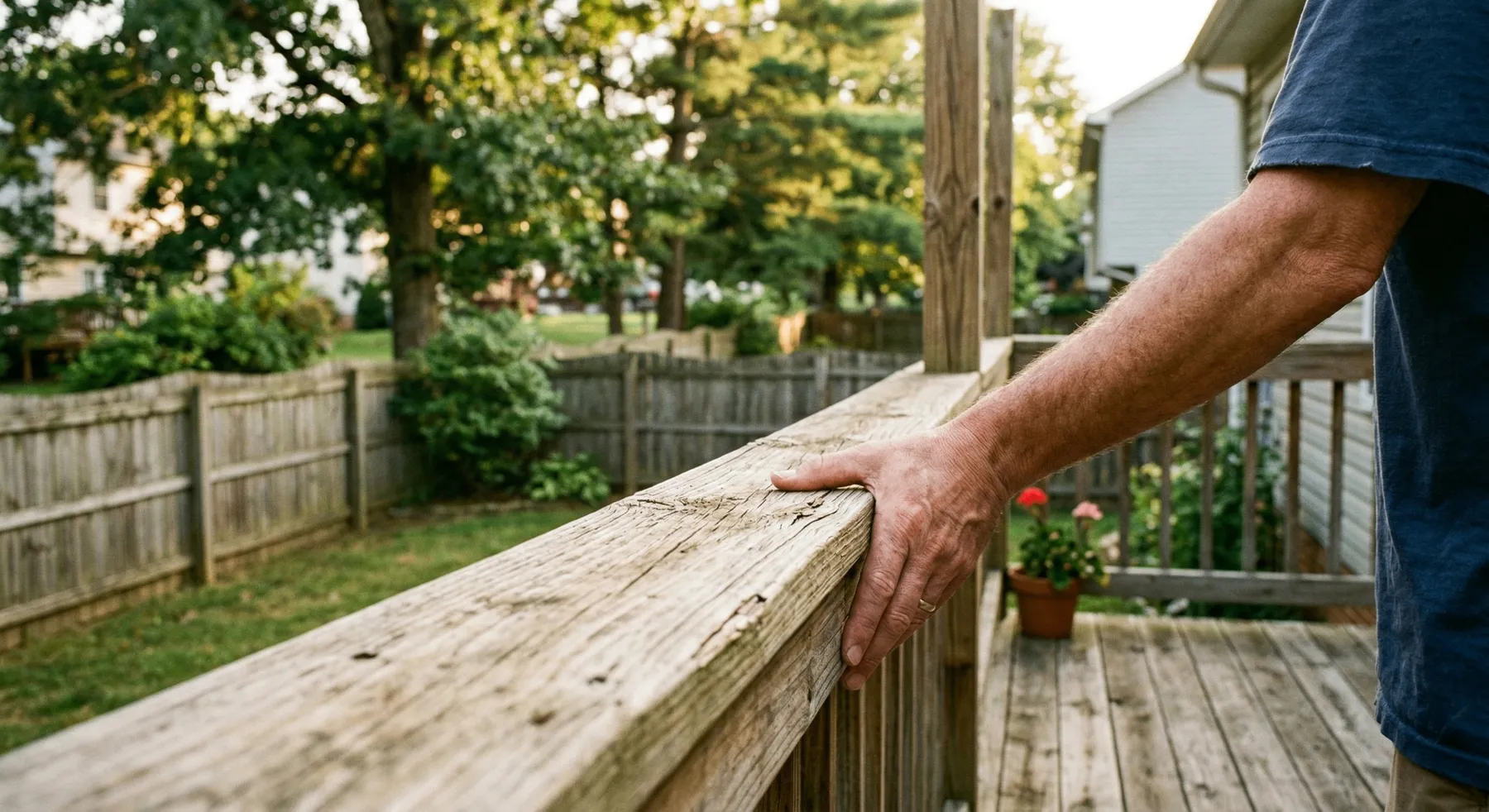
If your deck railing moves when you lean on it, your body already knows what your brain is trying to rationalize: something isn't right.
You grab it every time you walk out. Your kids hang on it. Your guests lean against it with a drink in one hand and a plate in the other. And somewhere in the back of your mind, you've started to notice — it doesn't feel the way it should.
Maybe you've stopped leaning on it yourself. Maybe you've told your mother-in-law to "use the other side." Maybe you watched someone grab it on the stairs last Thanksgiving and held your breath for a half-second.
That half-second? That's your answer.
TL;DR — Is My Railing Unsafe?
- If your railing wobbles, flexes, or feels loose — treat it as a real safety issue, not a cosmetic annoyance.
- The problem is almost never where your hand is touching. It's usually at the post base or attachment points — hidden from sight.
- A wobbly railing doesn't always mean "replace the whole deck." But it does mean something specific is failing, and ignoring it lets it get worse.
- The safest next step is an in-person evaluation. We'll tell you exactly what's causing the movement and what it takes to fix it — free.
Table of Contents
1. The 10-Point Railing Safety Checklist
If you notice any of these, it's time to stop brushing it off and get it checked:
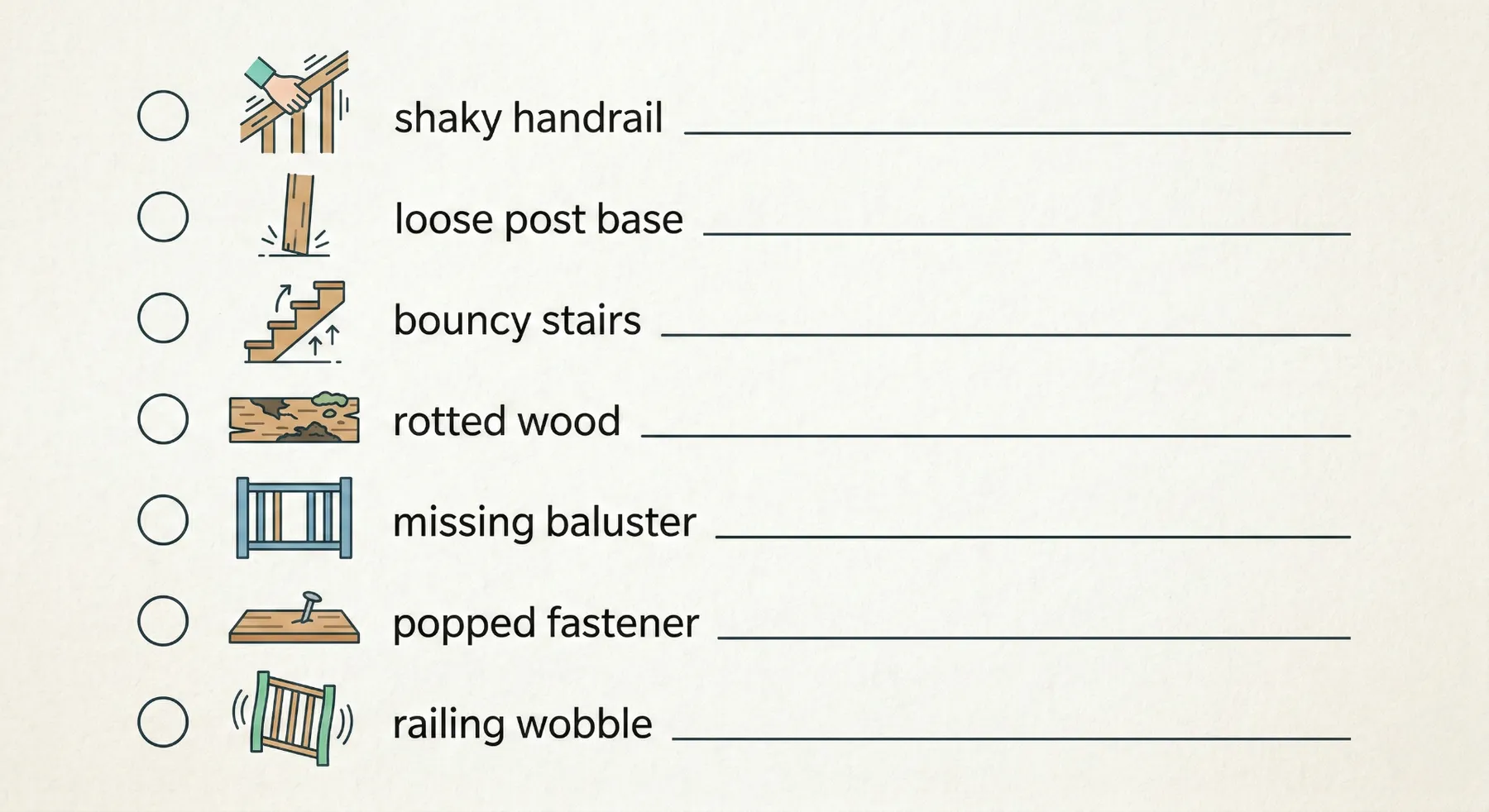
- 1The railing wobbles when you give it a firm push — especially near posts
- 2Posts feel loose at the base — they shift, click, or rock when you lean near them
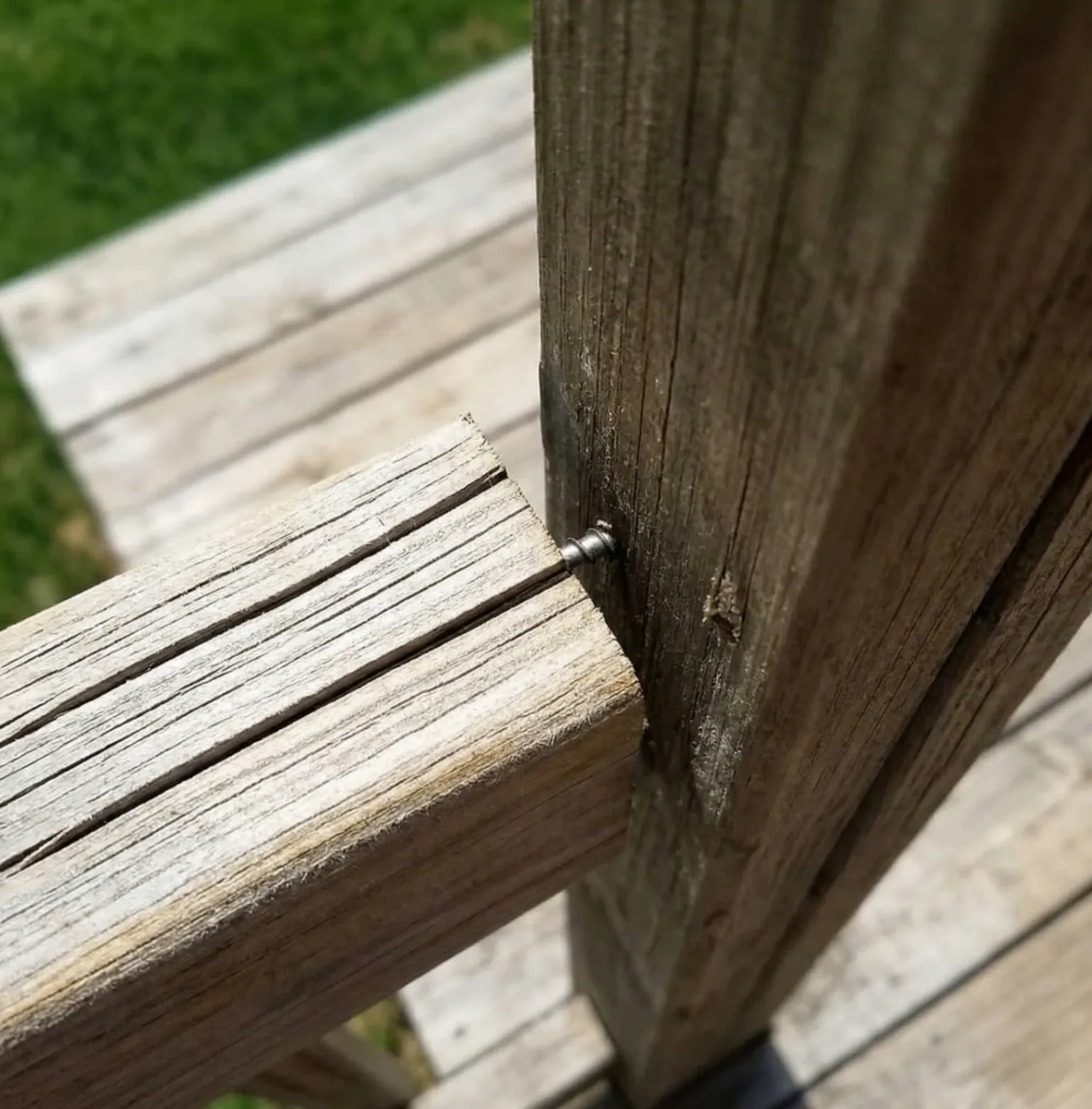
- 3Fasteners are backing out — screws popping, nails lifting, hardware loosening
- 4Wood looks soft, crumbly, or dark near the bottom of posts — possible rot
- 5Rails are separating at corners or connections — gaps growing over time
- 6Balusters or spindles move when you grab them — or sections are missing or cracked
- 7Stair handrail feels shaky — or is missing where you expect a stable grip
- 8Stairs bounce or shift — making the railing feel unreliable even if it "looks fine"
- 9You've started avoiding leaning on the rail — your instincts are data
- 10Kids or pets can slip under or through openings that feel bigger than they should
If you have kids, pets, or an elevated deck: treat "movement" as urgent. Don't wait for the next gathering to be the moment it gets tested the hard way.
2. Why Deck Railings Actually Fail
Most railing problems don't start with one big dramatic break. They start with small weaknesses that get worse — quietly — until the railing no longer behaves like a safety barrier.
Water Intrusion + Time
Outdoor structures live in constant moisture swings — especially in the NRV where you get summer humidity, fall rain, winter freeze-thaw, and spring mud. When water repeatedly gets into joints, end-grain, cracks, or around fasteners, materials degrade from the inside out. That's how you end up with rails that look okay but feel mushy or unstable in the spots that matter.
Poor or Aging Attachment Points
A railing is only as strong as the way it's connected — especially at posts and corners. Even when the top rail looks fine, the underlying connections can loosen with repeated use and weather cycles. A rail that was "tight enough" five years ago can be dangerously loose today.
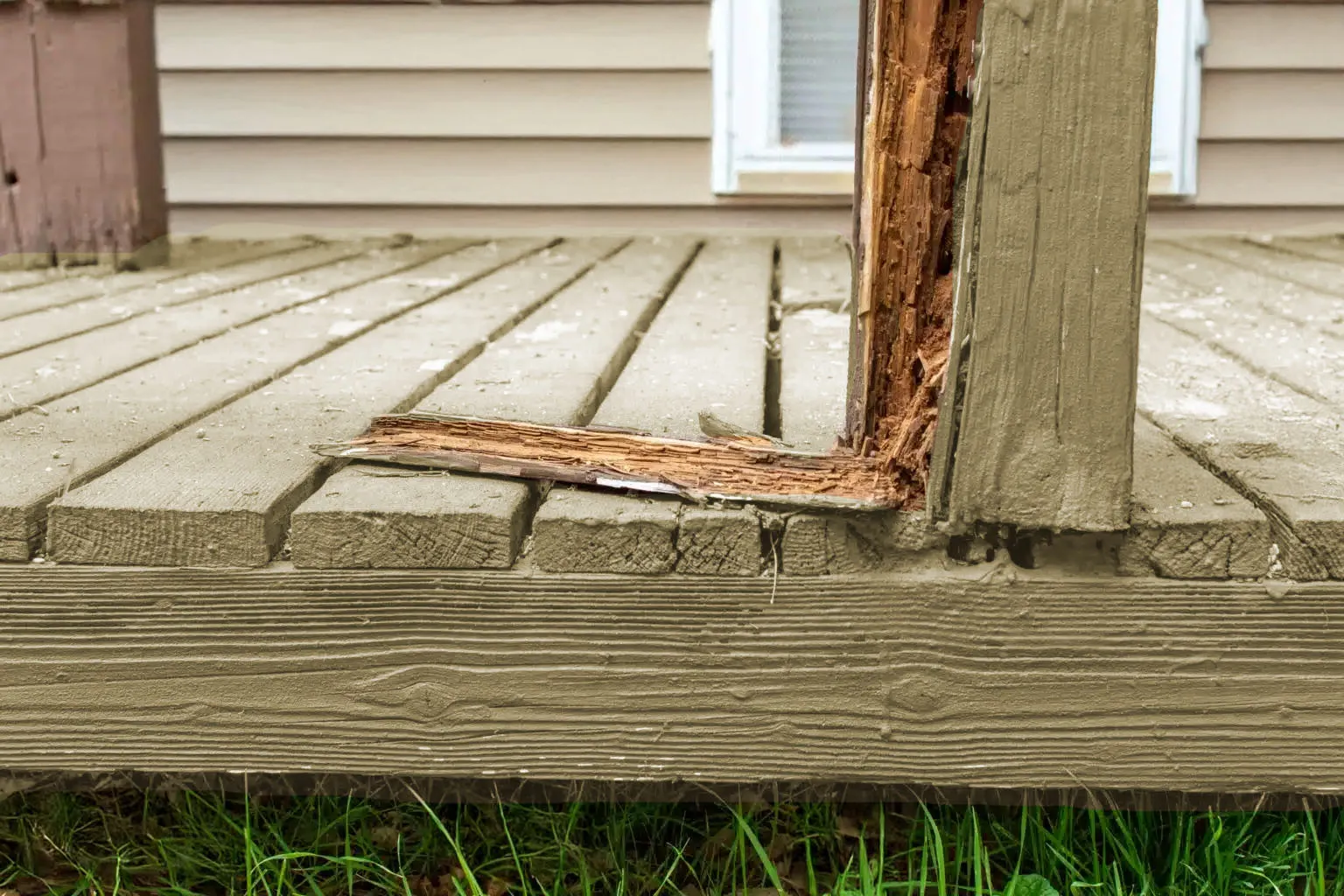
Post-Base Rot
A lot of "wobbly rail" complaints trace back to the bottom of the post — or where the post meets the deck surface. That area takes the most stress and is where moisture damage shows up first. You can tighten the top rail all day long, but if the post base is rotting, the whole system is compromised.
Repeated Lateral Load (Real Life)
People lean. Kids shake things. Dogs jump against it. Guests grab a rail when they miss a step. Railings deal with constant side-to-side force — not just standing there looking pretty. If the system wasn't built to stay rigid over years of real use, movement is inevitable.
"We had a very good experience with ReDeck. The pricing was reasonable and work was done promptly. The crew worked very hard and put in long days to get the job done. Would certainly recommend."
— Bill King, Christiansburg
3. Your Three Fix Options (And How to Choose)
The right fix depends on why it's moving. Here's the practical breakdown:
Option 1: Tighten / Repair
Best when: The structure is solid and the movement is minor — a few loosened fasteners or one localized connection.
What it should accomplish: eliminate the movement, restore confidence when you grab the rail, and prevent a small wobble from turning into a bigger failure.
What it can't do: "tighten away" rotted material, fix a failing post base, or make an underbuilt system behave like a stronger one. If the material is soft or the post base is compromised, tightening is a band-aid.
Option 2: Replace a Post or Section
Best when: One area is the weak link. The rest of the railing is solid, but one post, one corner, or one run is compromised. Replacing the failing component can restore overall rigidity — if the rest is worth keeping.
This is especially common when movement concentrates at a single post, or when one area has visible deterioration while others are stable.
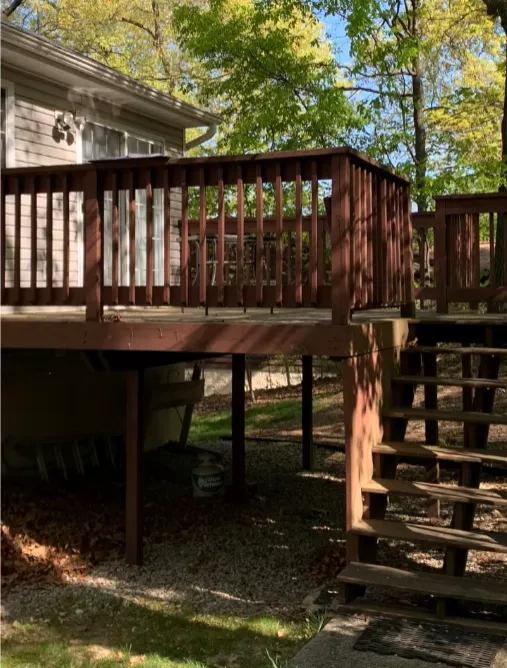
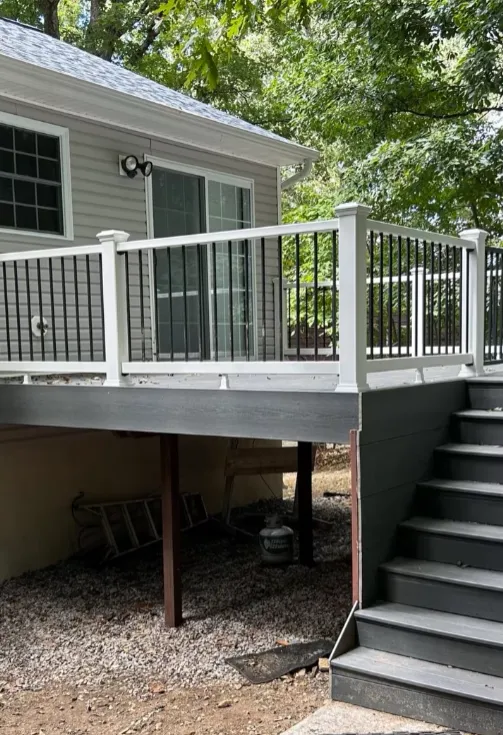
Option 3: Full Railing Replacement
Best when: Multiple points are loose, the design is dated, or the rail has been patched repeatedly. If the "system" is the problem — not just one piece — replacement is the cleanest safety move.
Full replacement is typically right when: multiple posts move, connections or materials are inconsistent, or you want a modern look with long-term stability.
Here's what most SW Virginia homeowners don't realize: a railing upgrade can be a standalone safety improvement. You don't have to "do the whole deck." But you also don't have to guess — we'll tell you what makes sense.
🔴 Is your railing telling you something? Trust your gut.
We'll come check it, tell you exactly what's causing the movement, and give you a clear plan — free.
Request a Free Onsite Safety Check →4. Railing Types We Install (And What We Won't)
Choosing a railing isn't just about style. It's about how it feels every single day: solid, comfortable, and finished.
Wood Railings
Best for a classic look and easy matching with existing wood elements. The tradeoff: wood needs ongoing upkeep outdoors and can deteriorate if neglected — especially in SW Virginia's moisture cycles.
Composite Railings
Best for homeowners who want a clean look with less routine maintenance. The tradeoff: system selection matters — not all brands and product lines perform equally for every project.
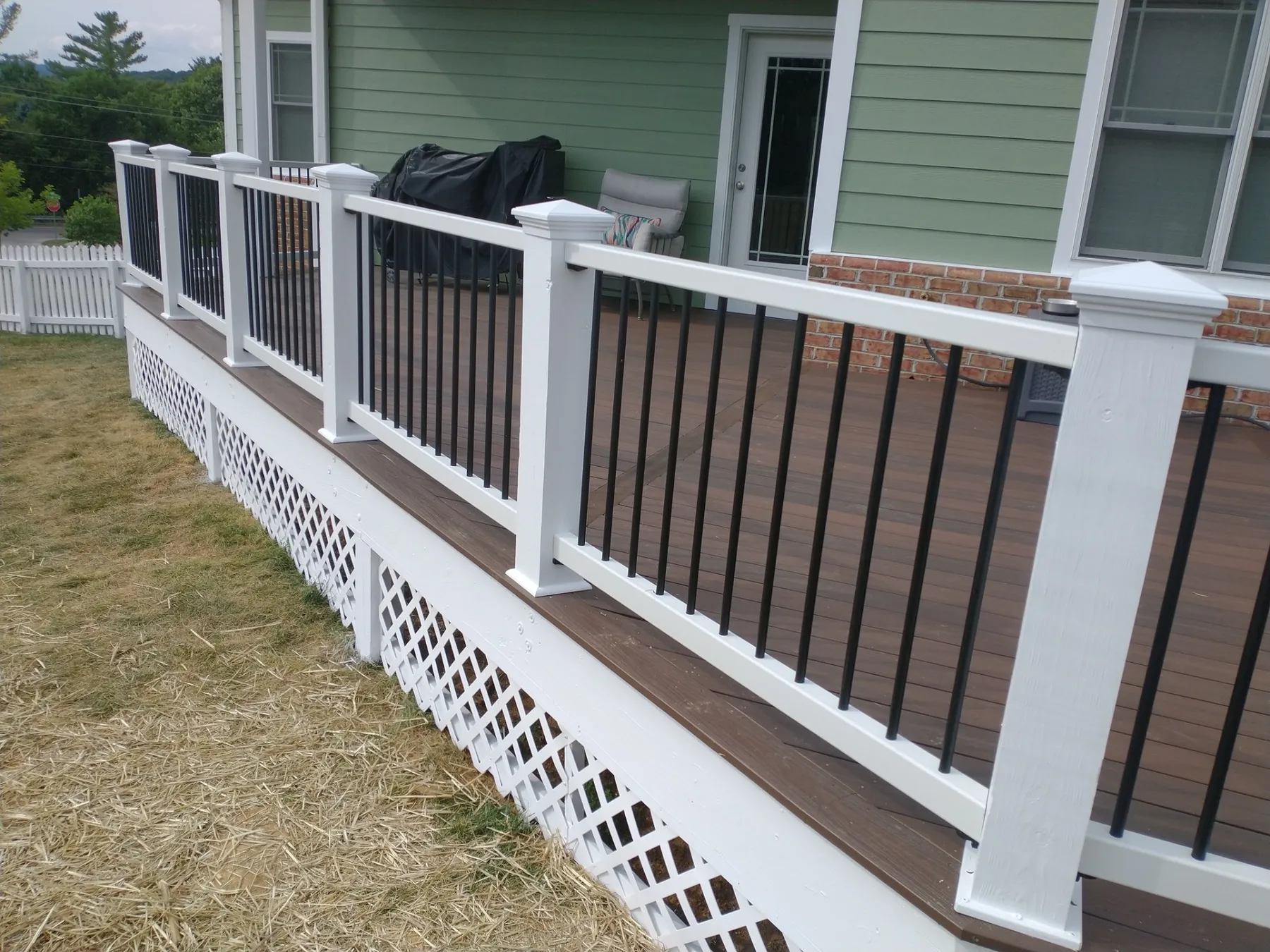
Black Aluminum Railings (Our Preferred Option)
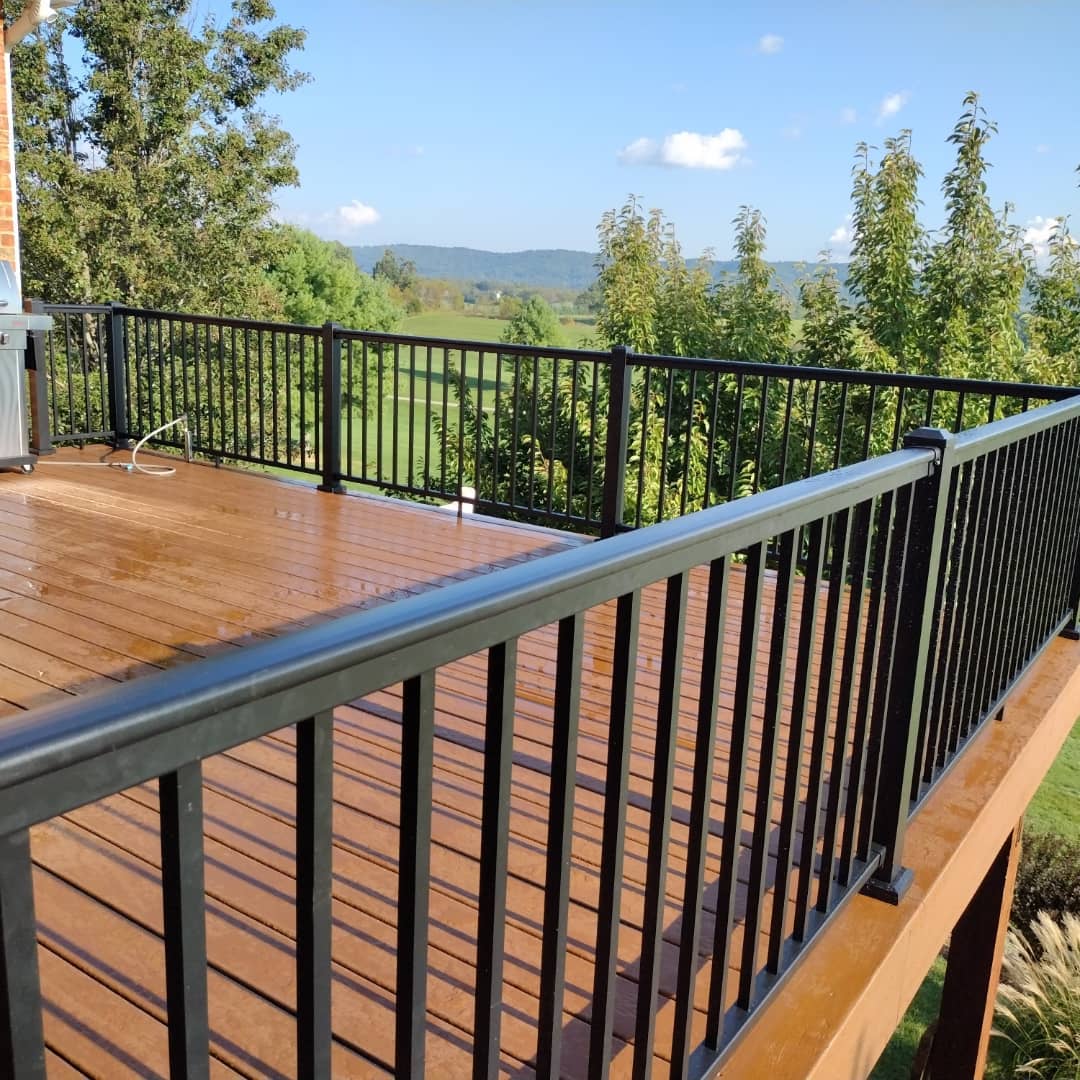
Best for a clean, modern look with a sturdy feel and virtually zero maintenance. This is what we recommend most often — and what we install most often — because it looks sharp against every board color, holds up without fading or warping, and feels solid for decades.
What We Don't Install
- No cable railings
- No TimberTech railing systems — we've seen enough issues that we won't put our name on them. We'll explain why during your consult.
→ Learn more about ReDecking and railing upgrades
5. Stairs: The Other Safety Hotspot
Homeowners usually focus on the railing first — because it's what you grab. But stairs are where small problems turn into real fall risk. And here's the connection most people miss: when the stairs move, the railing feels worse too — because everything is connected.
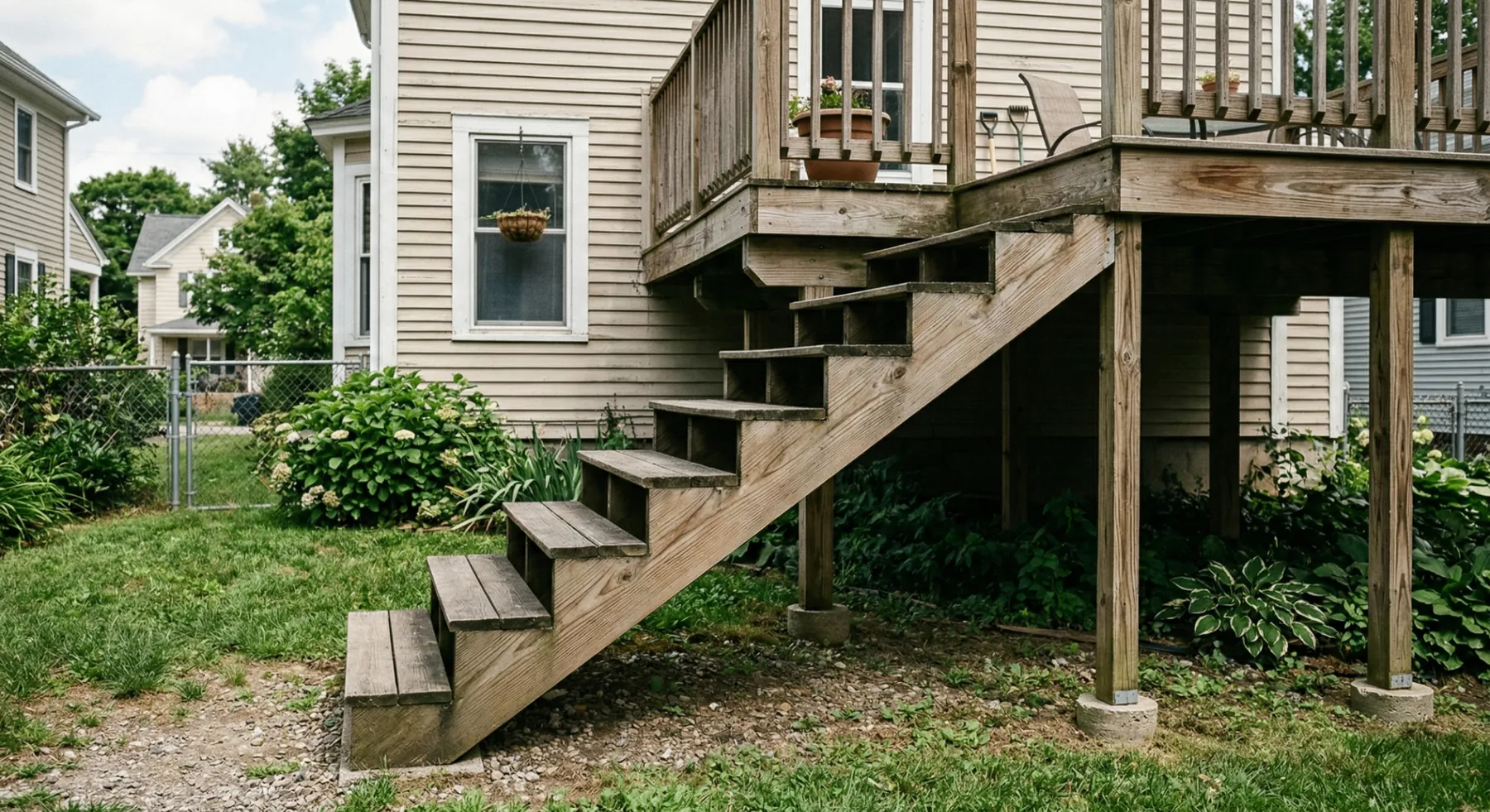
Stringers (The Backbone)
If the stringers are compromised, the entire stair system feels bouncy, uneven, or "sketchy." Our reality check: stairs often aren't a simple patch. We usually end up rebuilding stairs or replacing stringers — because that's what it takes to make the whole system feel solid and safe.
Rise/Run Consistency
When steps feel uneven — even slightly — people trip. If you ever catch your toe or feel like you have to "think" going up and down, the geometry may be off or the structure is shifting.
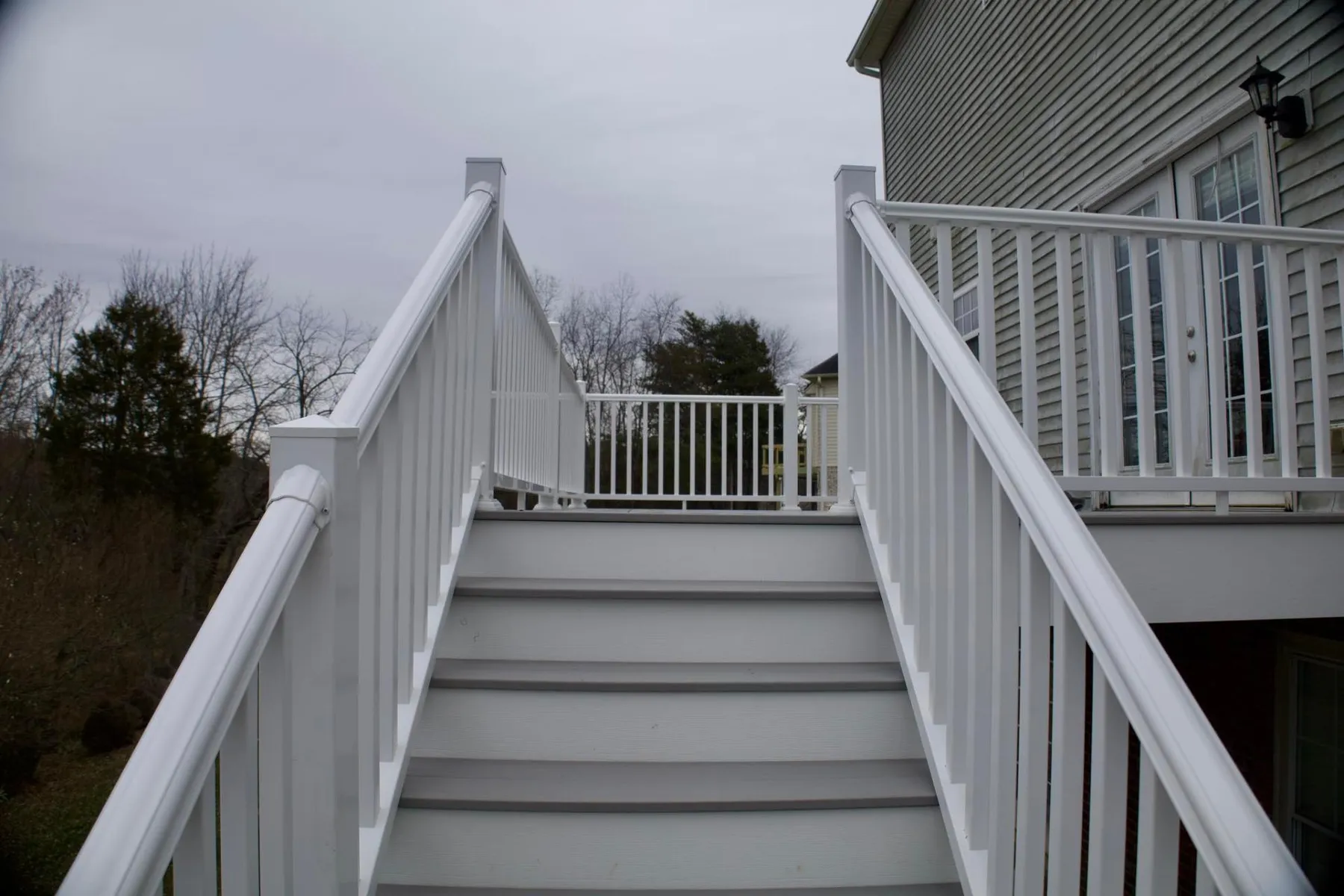
Handrails
A graspable, stable handhold matters — especially for kids, older family members, or anyone carrying food and drinks up and down the stairs. If your stair handrail moves when you pull on it, is missing where you expect it, or doesn't feel "grab-friendly" — don't normalize it.
6. When Rail Upgrades Make Sense With ReDecking
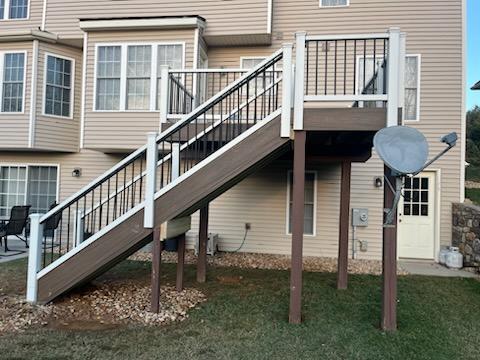
Many homeowners don't plan to "do the whole thing." They just want the deck to feel safe again. But here's the practical truth: when you're already improving the deck surface, railings and stairs are the smartest safety upgrades to bundle — because you're already investing in the parts you see and touch every day.
Rail and stair upgrades pair especially well with ReDecking when:
- The deck surface is being refreshed and you don't want the railing to be the weak link
- The railing is dated, loose, or mismatched after other improvements
- The stairs are showing bounce or shift and you want the whole experience to feel "like new"
Done together, the deck feels cohesive: safer, more comfortable, and visually finished — without leaving that one "I still don't trust it" area.
→ Read: What Is Deck Resurfacing (ReDecking)?
→ Read: How Much Does It Cost to ReDeck in Virginia?
"ReDeck did a wonderful job of replacing the entire structure while making it sturdier and larger. Very happy with every aspect of the structural integrity and pride in workmanship."
— Cg Arnell, Christiansburg
FAQ
Not necessarily. A wobbly railing is a serious safety flag, but the correct fix depends on what's causing the movement — fasteners, attachment points, post base condition, or something structural. The point is: don't guess. Let us look at it.
Wood, composite, and our preferred option: black aluminum. We do not install cable railings.
No. We don't install TimberTech railing systems — we'll explain why during your consult.
Sometimes small fixes work, but it's common for stair safety issues to lead to a bigger decision. We often find stairs need to be rebuilt or have stringers replaced — because that's what it takes to make the whole system feel solid and safe.
Yes — we handle permitting when required, including in Blacksburg where it can be more involved.
We serve Christiansburg, Blacksburg, Radford, Dublin, Pulaski, Salem, and surrounding SW Virginia communities.
Yes — a 1-year workmanship warranty on installation.
Get a Free Onsite Safety Check
If your railing or stairs feel questionable, don't wait for "someday." Safety problems don't announce themselves — they just get tested at the worst moment.
We'll come to your deck, check what's actually causing the movement, and give you a clear recommendation:
- What's actually unsafe — and why
- Whether it's a tighten/repair, a targeted replacement, or a full railing upgrade
- What to do about stairs if they're part of the problem
No guessing. No pressure. Just the truth about what's safe and what's not.
About ReDeck Virginia
ReDeck Virginia is a Class A licensed, insured deck specialist based in Christiansburg, VA, serving homeowners across the New River Valley. We repair, resurface (ReDeck), and rebuild decks — and we always start by telling you the truth about what yours actually needs.
Learn more about us →